
Dermabrasion Side Effects and Benefits
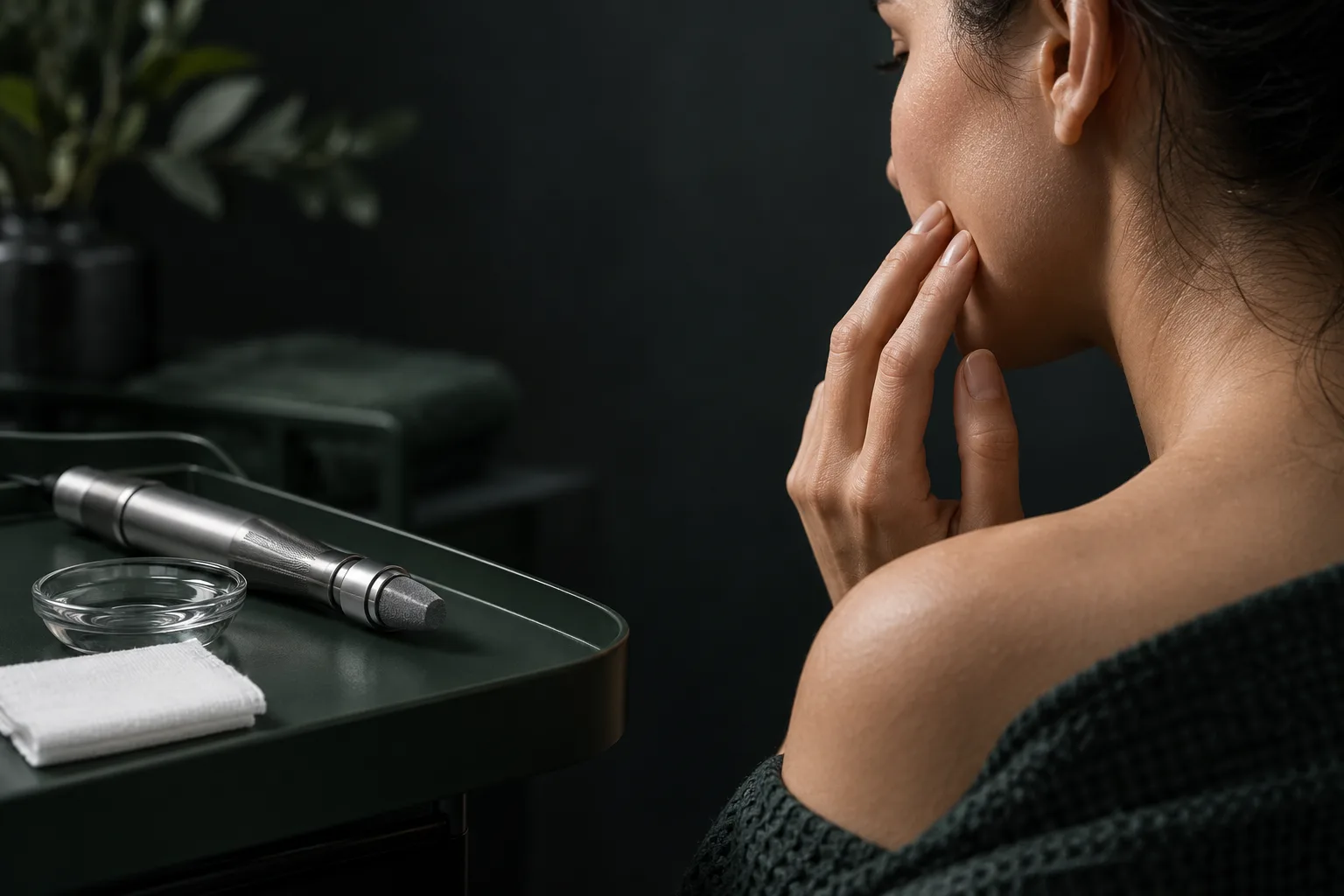
Dermabrasion has real benefits and real side effects. Read both lists before you ask for it.
The benefits come first, then how skin tone changes the picture, what the procedure and the first days involve, how long healing takes and which side effects can occur. Your provider decides whether it suits you.
What the sources list as benefits
Cleveland Clinic says studies show that dermabrasion stimulates collagen production in your skin, which boosts rejuvenation effects and means you'll have younger-looking skin, and that collagen production from a chemical peel isn't as effective. Cleveland Clinic also says studies show that dermabrasion is more effective at reducing deeper acne scars than chemical peels.
The American Society for Dermatologic Surgery says the new skin typically appears smoother and refreshed, and that outcomes can be dramatic and long-lasting. Its page on dermabrasion for aging skin sets out the detail. Ask your provider which benefits apply to your concern.
What counts as a good result
Set the target before the procedure. The American Society for Dermatologic Surgery says typically a 50 percent improvement in the skin condition is considered a good result, and that it may take several weeks or months for full results to become apparent.
Ask your provider what improvement to expect for your skin and how you will both judge it. A result that is good by that standard may still be less than you picture.
How skin tone changes the picture
Skin tone matters, and the sources point in two directions. Cleveland Clinic says dermabrasion offers good results if you have fair skin and that darker skin tones are more prone to scarring or discoloration. Cleveland Clinic also says dermatologists report less discoloration risk in medium skin tones with dermabrasion versus chemical peels.
Do not read either line as a verdict on your skin. Ask the provider how many dermabrasions they have performed on skin like yours and what they expect. Before that conversation, read a plastic surgery society's dermabrasion page for its account of the procedure.
The procedure and the first days
Cleveland Clinic says your skin will be numbed using local anesthesia or a freezing spray during the procedure so that you won't feel any pain. After the procedure, it says, you may feel like you had a bad sunburn, and if there is a severe stinging sensation, your healthcare provider may prescribe pain medications.
Cleveland Clinic also says your skin will be very pink and raw, and that without proper post-procedural care a scab-like crust will form, potentially delaying healing and worsening the outcome. Ask for the aftercare instructions in writing and ask who to call if the pain is more than expected.
How long healing takes
The American Society for Dermatologic Surgery says skin regrowth occurs within five to eight days, and that new skin is pink or red in appearance, fading to normal skin tones in six to 12 weeks.
Plan around that range. The first week is for regrowth, and the pink or red tone can remain for weeks after. Cleveland Clinic's guide to dermabrasion, its side effects, procedure and benefits covers the same ground and is worth reading before your appointment.
Which side effects can occur
Cleveland Clinic says side effects of dermabrasion are uncommon but can occur. It lists the most common complications as acne flare-ups, tiny white spots called milia that some people with acne rosacea get and that eventually go away as the skin heals, temporary or permanent uneven changes in skin color, temporary or permanent darkening of the skin usually caused by sun exposure in the days and months following surgery, enlarged pores that are usually temporary, scarring, swelling and infection.
Ask which of these your history makes more likely. Ask what you should do about sun exposure in the months after the procedure.
Weigh the lists together
The benefits are specific: collagen stimulation, better results than chemical peels on deeper acne scars, and smoother skin. The costs are specific too: a pink and raw skin surface, weeks of pink or red skin and a list of side effects that includes scarring and permanent color changes. Put both lists on one page and take it to your consultation. The American Society for Dermatologic Surgery's dermabrasion page is a good last check before you decide.